Written by: Gisela Luján Andrade, director & founder of Perú por el Desarme
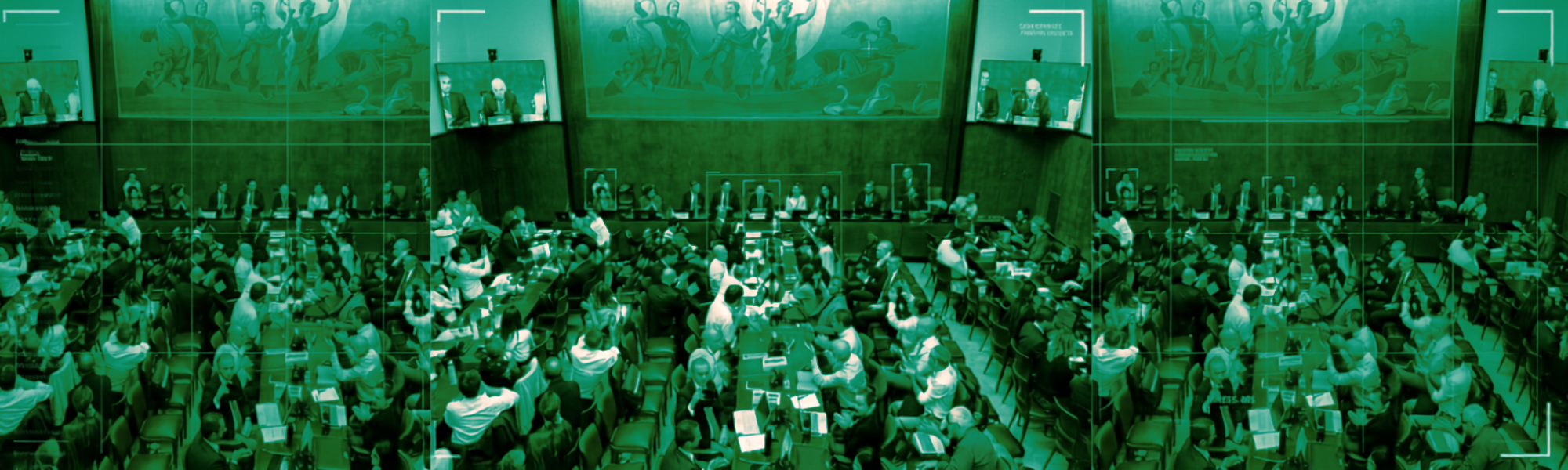
Diplomacy can be a thankless endeavor. That’s because the results achieved after arduous negotiations, however much effort was invested, will always be synonymous with concessions that often turn into sacrifices of demands some parties consider important. So even when there are relative victories, they will always be bittersweet, especially for those who had to give up more. The international process on autonomous weapons has been no exception to this pattern: a few days ago, States Parties to the Convention on Certain Conventional Weapons (CCW) reached an agreement by adopting a «set of elements» on these systems. This document was adopted by consensus by the CCW States Parties that took part in the Group of Governmental Experts meeting. It is expected to serve as the basis for a future legal instrument on autonomous weapons.
In this brief comment I write from a critical position, not out of political pettiness, but because I believe the way decision-making pathways are built in spaces like the CCW only ensures that any agreement reached will suit the convenience of major military powers. As the final GGE session showed, powers such as the US and Russia (among others) secured the removal of key references from the text now going to the Seventh Review Conference, references defended by a significant number of States, many of them from the so-called Global South.
As documented by several actors directly involved in the negotiations, this text eliminated any reference to obligations on the production and transfer chain of autonomous weapons, as well as fundamental requirements in the design, development, and use of these systems, such as explainability, predictability, reliability, and traceability (incidentally, the design and development of autonomous weapons was also dropped from the system’s characterization). Likewise, references to ethical considerations disappeared, and the scope of applicable law was considerably narrowed, from all international law to international humanitarian law alone.
The losses reflected in this final document force me to say that it is impossible to expect a strong instrument on autonomous weapons, one centered on the defense of civilian life and dignity, whose fundamental rights are already being subjected to decisions driven by the use of autonomous technology.
The problem does not lie in the enormous work and dedication of the many delegations that have repeatedly called for a prohibition on weapons systems that attack human beings without ensuring meaningful human control; it lies in the power architecture within which that effort has unfolded. The so-called consensus rule, which is a de facto veto power, is the fundamental explanation for such omissions.
All of this sacrifice, however, points to a weak foundation if the goal is a treaty as successful as other humanitarian disarmament treaties: the Convention on Cluster Munitions, which was born precisely out of the failure of a prior attempt within the CCW itself, or the Treaty on the Prohibition of Nuclear Weapons, which from its inception avoided any process governed by the consensus of military powers. In both, human suffering and the protection of civilians are at the center of international law, above the military interests of major powers. It is worth remembering that these treaties only achieved this focus because they left, or never entered, the CCW’s de facto veto architecture.
So allow me to disagree with the relative enthusiasm surrounding this agreement. With apologies to everyone directly involved in the negotiating rooms -held in Geneva, a Swiss city that few Global South civil society organizations can access, due to financial constraints and, in some cases, international mobility restrictions-, the «set of elements» for a legal instrument on autonomous weapons is not a victory for the countries and communities, in all their diversity, that come primarily from territories where these technologies are already being used without any regulation.
The Seventh Review Conference, which will review this text in November, also requires consensus. This means the same small group of States that imposed its conditions to approve this text will continue exercising this de facto veto power over any mandate that runs counter to their own interests.
Honestly -and this is a very personal opinion- within the CCW it will be difficult to achieve an instrument that places the spirit of civilian defense and protection at its core. What is likely to happen instead is that a treaty gets reached, and with it, enough governance language for the system to appear responsive, without that translating into the substantive outcome that the empirical evidence – Gaza, Ukraine – demands